

Across two different shows, one thing became clear: It’s not just what you show. It’s how people experience it.
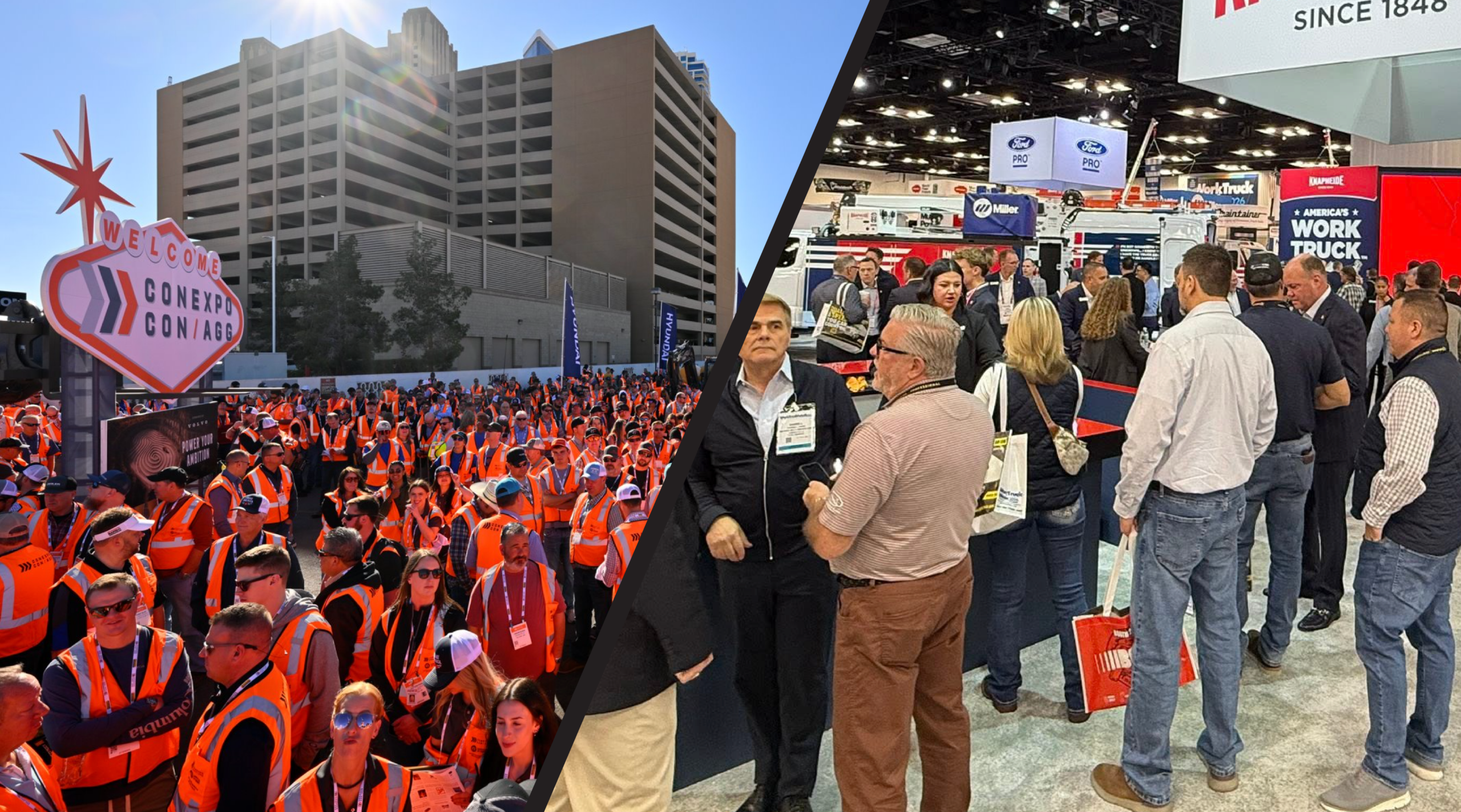
In March, our teams spent time on the ground at both CONEXPO and NTEA Work Truck Week — two important events for the industries we serve. CONEXPO, held every three years in Las Vegas, draws hundreds of thousands of attendees and showcases the full scale of construction innovation, from heavy equipment to emerging technologies shaping the future of the jobsite. NTEA Work Truck Week, while smaller in scale, is just as influential within the commercial vehicle space, bringing together upfitters, OEMs and distributors in a setting that’s as much about relationships as it is about product.
On paper, they’re very different shows. But walking both floors, talking with teams and watching how people engaged, a consistent pattern started to emerge.
The brands that stood out were the ones creating experiences people actually wanted to be part of.
The Moments That Worked Weren’t Complicated
One of the clearest patterns across both shows was how consistently people gravitated toward things they could interact with.
At CONEXPO, that often meant climbing into equipment, exploring cutaways or talking directly with subject matter experts who could answer detailed questions in real time. Those moments created a level of engagement that no screen or looping video could replicate.
At NTEA, the interactions were simpler, but just as effective. A pop-a-shot game set up in the back of a truck drew a steady crowd. A leather stamping station had a line that didn’t seem to let up. Giveaways weren’t just nice to have. They were part of the expectation, and when done well, they gave people a reason to stop and stay.
In contrast, the more passive elements (think the large screens, static displays, etc.) tended to fade into the background. People noticed them, but they didn’t linger.
What we kept seeing, over and over, was that engagement isn’t driven by how much you show. It’s driven by what you invite people to do.
Presence Is Something You Feel Before You Understand
The difference between a booth people pass and a booth people enter isn’t always obvious, but you can feel it immediately.
At NTEA, there were booths that were consistently busy. There was movement, conversation and a steady flow of activity throughout the day. In some cases, that looked like ongoing demos or guided walk-throughs. In others, it was simply the result of a space designed in a way that invited people in and gave them a reason to stay.
You didn’t have to stop and analyze why it worked. You could feel it as you walked by.
That’s what made the contrast so noticeable. Other booths, even large ones backed by well-known brands, struggled to generate that same sense of momentum. Sometimes it came down to layout. Other times, it was a lack of clarity, especially when multiple brands or messages competed for attention within the same footprint.
At CONEXPO, the most effective exhibitors approached this more deliberately, designing their spaces in zones and guiding attendees through a clear experience rather than presenting everything all at once.
Across both shows, the takeaway was hard to ignore: Presence is about how intentionally your booth is designed and how much energy it creates.
The Exchange Still Matters More Than the Technology
If there’s one area where trade shows are still trying to find their footing, it’s data capture.
At CONEXPO, QR codes were everywhere — sometimes to the point of confusion, with multiple codes competing for attention and very little clarity around what you’d actually get by scanning them.
At NTEA, the approach often felt more traditional. Conversations led to handshakes, which led to business cards. Some booths incorporated iPads or digital forms, but the overall experience still leaned heavily on personal interaction.
Despite those differences, the brands that succeeded in capturing attention (and information) all had one thing in common: they made the value exchange obvious. Whether it was a quick badge scan or a more conversational approach, people understood what they were getting and why it was worth their time.
And when that was clear, they didn’t hesitate, even if it meant waiting in line.
Related Content: Say Hello to Our New Event Lead Capture Friend — Captello
The Real Conversation Is Bigger Than the Product
Another subtle but important shift showed up in the kinds of conversations happening on the floor, especially at NTEA.
It didn’t feel like a room full of introductions. It felt like a room full of ongoing relationships. People weren’t just asking, “What is this?” They were asking, “What’s new?” and “What’s next?”
That aligns closely with what stood out at CONEXPO, where the strongest brands were telling broader stories about uptime, service networks, flexibility and long-term performance.
In both cases, the emphasis had moved beyond the initial sale. The focus was on what happens after — the full lifecycle of the relationship. Because for industrial buyers, the decision isn’t just about what something does today. It’s about what it means over time.
Where This All Comes Together
Taken individually, none of these observations are entirely new. But seeing them play out so consistently, across two very different shows, makes the shift hard to ignore.
Trade shows are no longer just about showing what you make. They’re about demonstrating how you think, how you support your customers and what it actually feels like to engage with your brand.
And that’s where things often start to break down.
Because most trade show efforts are still built in pieces — booth design in one place, messaging in another, lead capture somewhere else and brand layered on top.
What we’re seeing now is that the brands pulling ahead are the ones connecting those pieces. They’re aligning brand, experience, content and systems into something that feels intentional from the outside and effective on the inside.
The Opportunity Ahead
Trade shows haven’t lost their importance, but their role has clearly evolved.
What used to be a moment for launching something new has become an opportunity to demonstrate credibility, build momentum and create an experience people actually remember. It’s no longer just about being seen or collecting leads; it’s about what people take with them after they leave your space.
The brands pulling ahead understand this and are designing experiences that reflect it. Others are still relying on presence alone, and increasingly, that’s not what gets noticed.
If you’re rethinking how your brand shows up at trade shows or planning for your next one we’re always up for a conversation.