There’s this thing we do in marketing where we call creative ideas “brave” when what we usually mean is “a little harder to get approved.”
I get it. “Brave” sounds good. It makes the work feel important and cinematic, like someone should be slowly walking away from an explosion while the case study metrics appear in tasteful Helvetica. It gives everyone in the room a little jolt of creative righteousness, which is fun for about 14 seconds until someone from legal clears their throat or a stakeholder says, “I just worry this might be too much for our audience.”
And just like that, the brave idea starts its long, sad march toward being a slightly more expensive version of something everyone has already seen.
But I don’t think our problem is that clients, leaders or brands lack bravery. Our problem is that we keep framing distinctive creative as the risky choice when, more often than not, the real risk is spending very real money on work that feels safe internally but disappears completely externally.
Today’s Audiences Expect More
The truth is, most audiences are not sitting around waiting to reward brands for behaving appropriately. They are busy and distracted. They are over-messaged, underwhelmed and developing the kind of scroll reflex that is actively being studied by very concerned scientists. They do not owe us their attention just because we bought the media placement. We have to earn it, which is a very inconvenient truth for anyone who was hoping the logo might do the heavy lifting.
Related Content: Combatting the Attention Crisis for Marketers
It’s time to stop selling ambitious creative as “brave” and start selling it as what it often is: the more rational response to what we stand to lose if we keep doing what we have always done.
There’s a reason “We’ve always done it this way” feels so dangerous in marketing. It usually shows up wearing the very reasonable outfit of institutional knowledge, but underneath it is often just an assumption we have stopped questioning.
- We assume we know where our audience spends time.
- We assume we know what message will move them.
- We assume we know what the brand can and cannot say because at some point, possibly during a meeting with bad lighting and worse coffee, someone decided it was true.
And assumptions are not inherently bad. We all use them. They are part of how work moves forward without everyone spiraling into a 19-tab research investigation every time we choose a verb. But assumptions become expensive when we mistake them for evidence.
Related Content: What We Know to be True: A Cautionary Tale About Assumptions
That is where marketers get into trouble. Not because they are lazy or unimaginative, but because “safe” can feel so responsible while quietly creating a whole different kind of risk. The risk of irrelevance, sameness and making a perfectly polished campaign that performs like a beige wall with a CTA button.
The Business Risk of Blending In
People are generally more motivated to avoid a loss than to chase an equivalent gain, which is one of those behavioral science ideas that feels fancy until you realize you have personally lived it every time you kept a shirt you didn’t like because returning it felt harder than losing the $28. In marketing, that means “This idea could help us stand out.” is often less persuasive than “If we continue showing up like everyone else, we risk spending more to be remembered less.”
That is a different conversation.
It moves the work out of the land of personal taste and into the land of business consequence, which is where ambitious creative should have been living all along.
Because the point is not to make something weird for the sake of weird. The point is to make something specific enough, relevant enough and memorable enough to do the job we are paying it to do.
And while we’re here, let’s talk about FOMO, because it has been unfairly reduced to countdown timers, limited drops and those vaguely threatening ecommerce messages that say “six people are looking at this item,” as though a stranger named Brenda from Ohio is about to steal your patio umbrella.
In B2B marketing especially, FOMO is not always about missing a moment. It is about falling behind. It is the fear that competitors are learning faster, personalizing better, showing up more usefully and building stronger relationships while your brand is still debating whether the headline has too much personality. It is the creeping realization that customer expectations have moved on, and the thing that used to feel dependable may now be the thing making you easier to ignore.
That is not a creative problem. That is a business problem with creative symptoms.
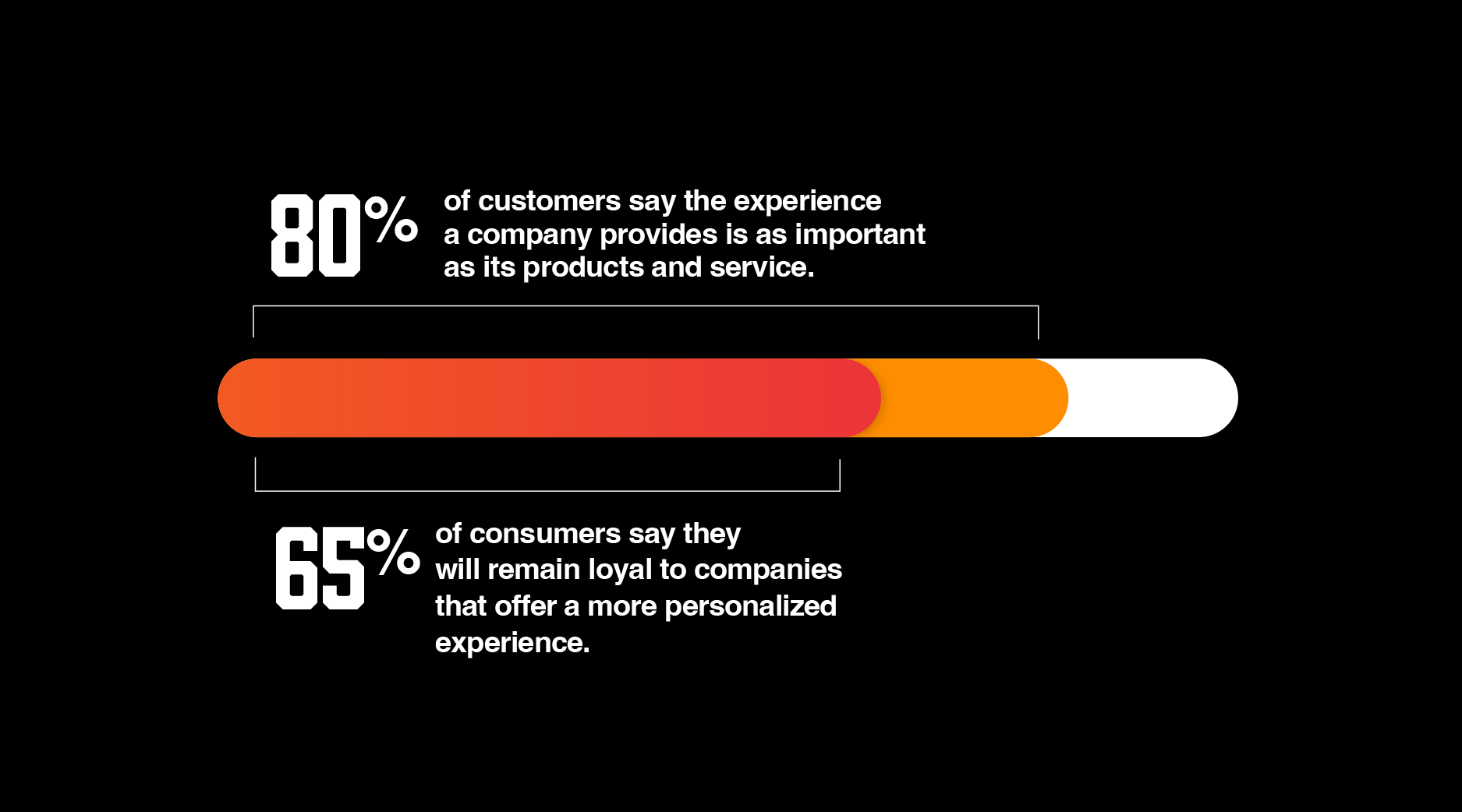
Customers expect more relevance now. They expect brands to know enough about them to be helpful without being creepy, which is admittedly a narrow and thrillingly awkward tightrope. They expect content to feel useful, experiences to feel intuitive and messages to sound like they were made for actual humans instead of a committee that once heard a customer described in a segmentation workshop.
Related Content: From Data to Delivery: Mastering Personalization in Marketing
Reframing “Brave” as a Business Decision
When we pitch more distinctive, personalized or emotionally resonant creative, we should not position it as a wild leap into the unknown. We should position it as a response to the known costs of doing nothing different.
- What do we lose if we keep sounding like the rest of the category?
- What do we lose if our customers have to work too hard to understand why we matter?
- What do we lose if our media dollars drive impressions but not memory?
- What do we lose if our competitors are willing to speak more clearly to the customer’s actual problem while we are still polishing a message that makes everyone internally comfortable?
Because “brave” asks stakeholders to be courageous. Loss aversion asks them to be honest, and honesty is usually where the good work starts.
This does not mean we scare people into approving creative ideas. Nobody needs the marketing equivalent of someone bursting into a conference room yelling, “Differentiate or perish!” while knocking over a tray of Panera. If we believe a more unexpected creative direction is right, we should be able to explain why it is right in terms that go beyond “it feels fresh.” Fresh is nice, but fresh is also what people say about gum.
The irony is that when you remove the word “brave,” the creative often gets stronger. It can no longer rely on the romance of risk, but has to be useful. It has to be accountable. It has to prove that it understands the customer and the business at the same time, which is where the best marketing usually lives anyway.
Because distinctive work is not inherently risky. Unsupported work and unvalidated assumptions are risky. Spending budget on messages no one remembers is risky. Letting fear of internal discomfort outweigh fear of market indifference is risky.
The “safe” idea may protect everyone in the approval meeting, but that does not mean it protects the business.
A Better Question to Ask
So the next time we are tempted to call an idea brave, let’s pause and ask a better question. Not, “Will this make us look bold?” but “What happens if we don’t do it?”
Because the most powerful creative ideas are not the ones that make brands feel fearless. They are the ones that make the cost of staying the same impossible to ignore. And if that makes the work easier to approve, better for the audience and harder for competitors to sleep on?
Well, how brave of us.