
I attended CES (a global technology event held annually in Las Vegas) for the first time this year for a very specific reason: Caterpillar is our customer.
After more than two decades working alongside heavy industry brands, I wanted to see in real time how an industrial leader shows up at a consumer electronics show. Not just what they say. But how they listen, lead and translate complexity in a space not built for them.
Awe Was Easy
Let’s start with the obvious. CES is impressive.
The consumer side of the show delivers awe at scale: TVs so thin they disappear into walls, fully automated homes, immersive gaming environments, robots designed as companions (and pets) at price points that suggest they’ll soon be accessible to everyday households. E-bikes everywhere. Autonomous vehicles and RVs that made me briefly imagine an entirely different lifestyle.
CES excels at showing what’s possible.
But that wasn’t why I was there.
At Simantel, we spend our days helping industrial and B2B brands navigate moments exactly like this — moments where technology accelerates faster than customer understanding and where relevance must be earned in unfamiliar spaces. CES wasn’t a detour from our work. It was a live case study in it.
I Was There for the A-Ha’s
I experienced CES through a business lens — asking a different question:
What does it look like when an industrial brand shows up in a consumer-first environment? And, more importantly, does it work?
What I saw reinforced a powerful truth: relevance doesn’t come from pretending to be something you’re not. It comes from knowing exactly who you are and why you matter.
Caterpillar: Grounded in Reality, Even at CES
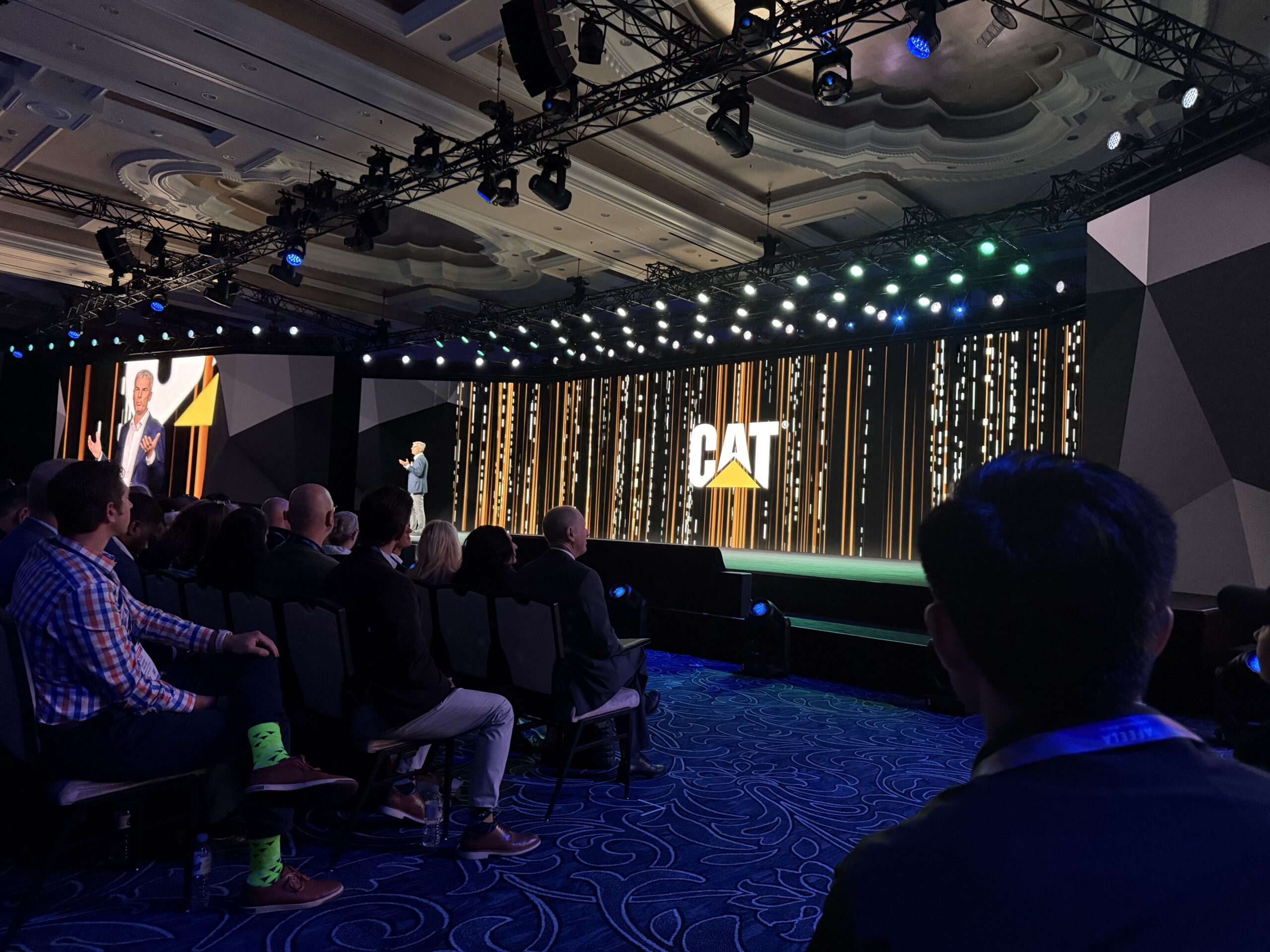
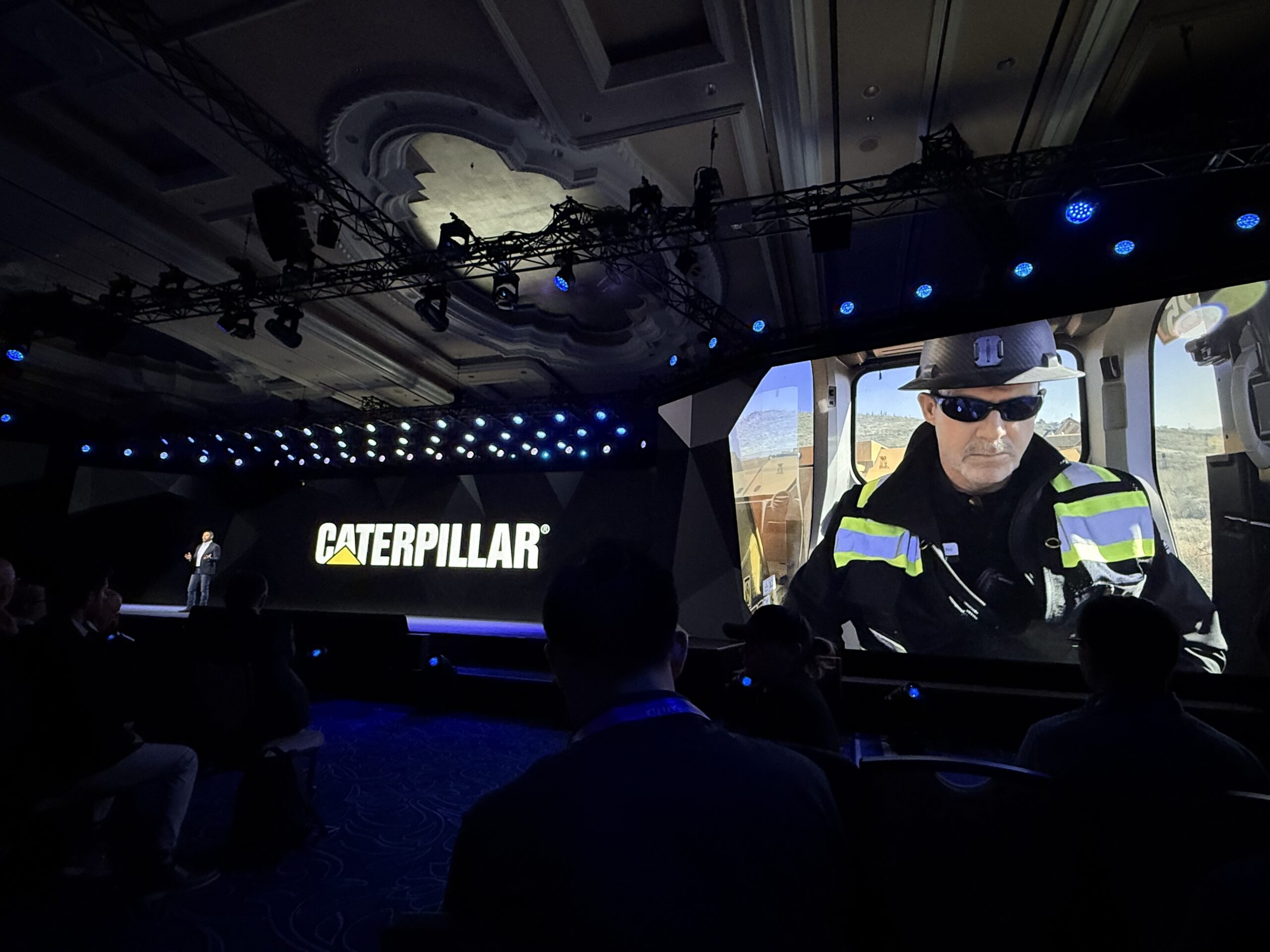
Caterpillar didn’t try to out-consumer the consumer brands. Instead, they anchored advanced technology in physical reality — people, machines, minerals, power and the work that makes modern life possible.
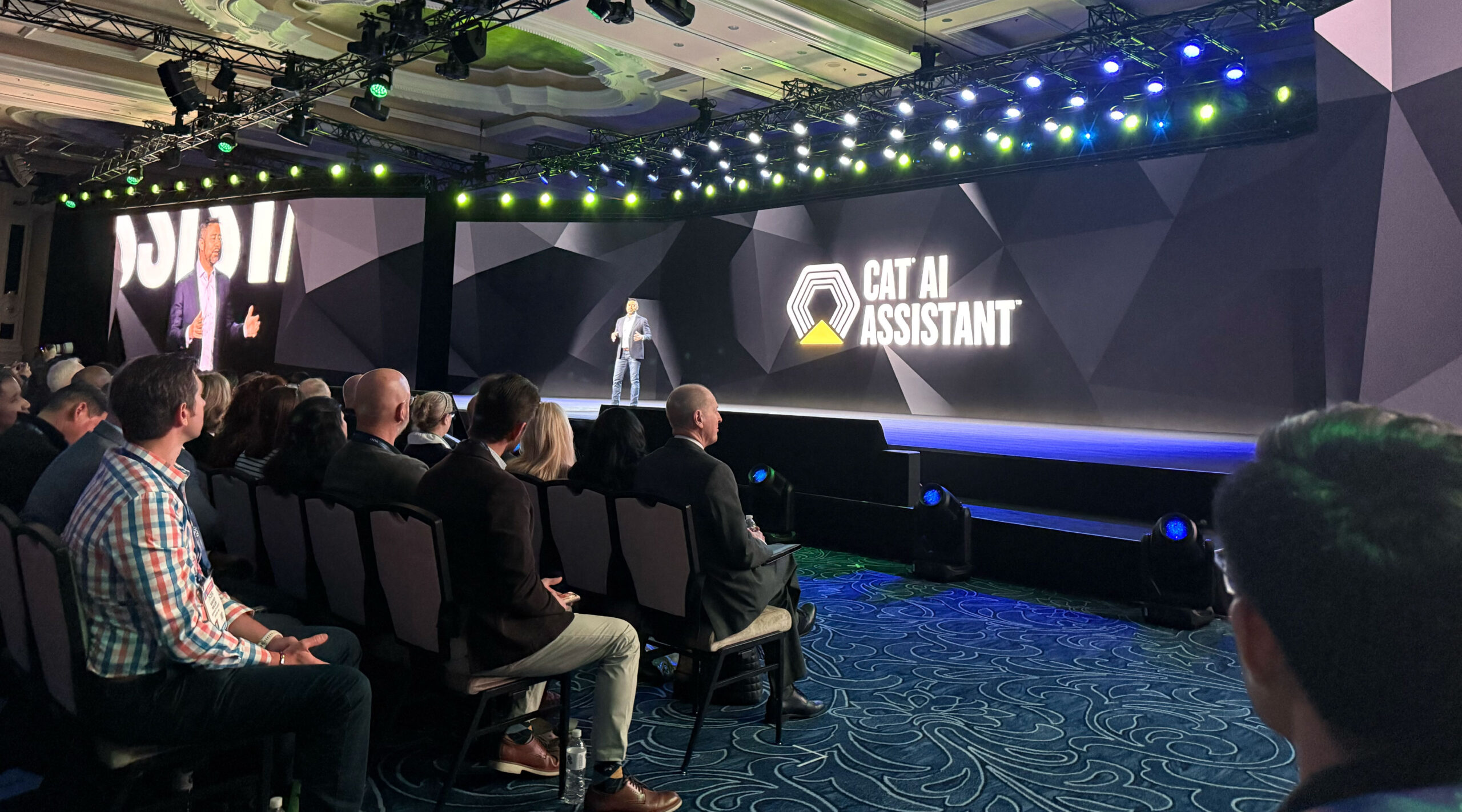
Their AI Assistant wasn’t positioned as futuristic magic. It was positioned as practical intelligence that helps operators, fleet managers and dealers work smarter together. That distinction resonated.
Even more powerful was how they connected innovation to responsibility. Ending their keynote with a $25M commitment to strengthening the workforce as roles evolve sent a clear signal: technology matters, but people matter more.
In a space filled with future-forward language, that grounding stood out.
This is the work we believe in — helping brands translate innovation into meaning, not marketing theater. Progress only matters when it connects to real people doing real work.
The Real CES Still Belongs to Humans
One of the more ironic takeaways from CES was this: the most meaningful moments didn’t happen on the show floor.
They happened in conversations — in hotel lobbies, restaurants and side meetings across Las Vegas. Leaders, partners, agencies and media gathering to interpret what they were seeing together.
In a show dominated by automation, the differentiator was still human connection.
You can’t understand change from a distance. You have to show up.
It’s also why we continue to believe the best strategies are built shoulder-to-shoulder with clients in rooms where ideas can be challenged, refined and grounded before they ever reach a screen.
What I’ll Carry Forward
Watching Caterpillar at CES reinforced something I believe deeply as a leader and partner to industrial brands: The future isn’t won by chasing every new technology. It’s built by brands that understand their role, honor their responsibility and bring people along.
When I mentioned our long partnership to Caterpillar’s CTO, Ogi Redzic, he smiled and said: “Let’s hope you’re around for 40 more.”
That line stuck with me. Longevity today isn’t guaranteed by history alone. It’s earned by showing up thoughtfully, even in unfamiliar spaces.
CES delivered plenty of awe. The real value came from the a-ha’s.
For industrial brands navigating what’s next, the lesson is simple — the work is not. Show up. Stay grounded. And never forget who you’re building the future for.