
There’s a quiet revolution happening in B2B marketing, and it doesn’t start with a platform. It starts with a shift in mindset.
Marketers are growing weary of the fragmented systems, duplicated efforts and misaligned metrics that have long defined the way we work. As marketing ecosystems become more complex — especially in industries like manufacturing and insurance — we’re seeing more and more organizations embrace something called the Universal Marketing Model (UMM).
While the term might sound grandiose, at its core, UMM is a practical framework that aligns people, processes, data and platforms under one shared strategy. It’s not a silver bullet, but it is a North Star for enterprise marketing organizations trying to unify their efforts around a single view of the customer — especially when that “customer” could be a company, an individual or a hybrid buying group.
Let’s break down what UMM really means, how to start moving toward it and why B2B brands must tackle the thorny issues of identity management and many-to-one contact-to-company relationships head-on.
What is UMM, Really
At Simantel, we define the Universal Marketing Model as a strategic framework that allows marketers to:
- Connect all marketing efforts across channels, teams and stages of the funnel
- Centralize data and reporting to support better decision-making
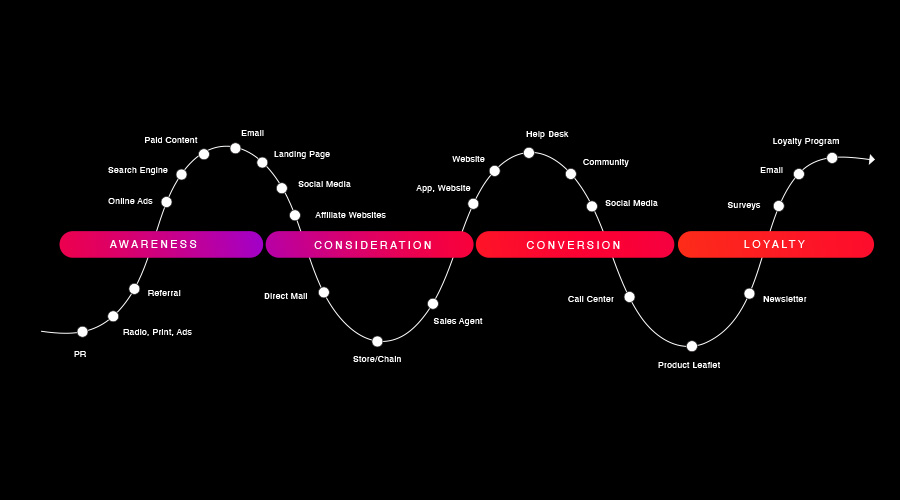
- Align messaging and experiences across the entire customer lifecycle
- Break down silos between brand, demand generation, digital, sales enablement and customer experience
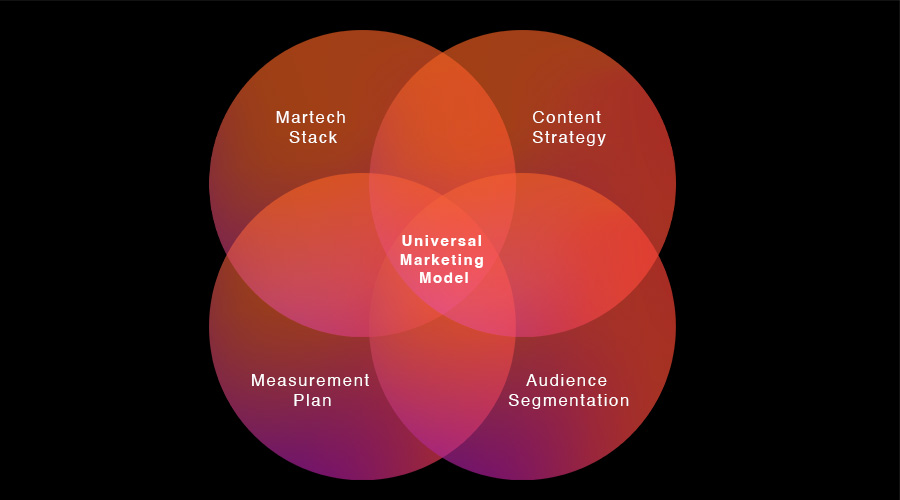
In a perfect world, UMM brings together your martech stack, your content strategy, your measurement plan and your audience segmentation in a way that reflects how real customers buy — across devices, touchpoints and team members.
Sound ambitious? It is. But with today’s tools and a disciplined approach, it’s achievable — and increasingly necessary.
Read More: Combatting the Attention Crisis for Marketers
So Why are We Seeing Renewed Interest in UMM?
Well, the pressure on B2B marketing teams has never been greater. We’re expected to deliver personalized, omni-channel experiences while proving ROI, enabling sales and managing an ever-expanding stack of platforms and tools.
Meanwhile the customer journey is actively changing. Buying committees are growing. Multi-contact marketing to reach key decision-makers and influencers is often necessary to retake share of wallet and individual buyers conduct extensive research before ever talking to sales. Increasingly, we’re selling into accounts, not just individuals — which means our marketing needs to reflect many-to-one (and sometimes many-to-many) relationships.
Not to mention AI and automation are becoming more powerful. But they’re only as smart as the data they’re fed. Without a unified model that brings structure to your marketing efforts, your AI tools will amplify chaos — not clarity.
How to Start Moving Toward a UMM
If UMM is the destination, the road there involves thoughtful planning, stakeholder alignment and technical groundwork. Here’s a step-by-step approach to help B2B organizations start making progress:
1. Audit Your Current Marketing Ecosystem
Start by mapping what you have today. Inventory your platforms (CRM, CMS, MAP, analytics tools), your workflows (campaign development, lead nurturing), and your data (first-party, third-party, intent). Document who owns what, how it connects (or doesn’t) and where the biggest pain points lie.
Pro tip: Look for areas where multiple teams are doing similar work in silos — such as segmentation, campaign targeting or lead scoring. These are prime candidates for unification.
2. Create a Shared Customer Data Model
One of the cornerstones of UMM is a shared understanding of “who” your customer is — and how they show up in your systems.
This is where identity resolution comes into play. Especially in B2B, where a single buyer might have multiple emails (personal, corporate, partner) or engage with your brand through different channels or devices, you need a way to unify those signals into a single profile.
Things to consider:
- Use tools like Customer Data Platforms (CDPs) or data lakes to create unified profiles
- Establish a canonical ID for each contact and company
- Define rules for merging, overwriting or splitting identities when needed
- Account for role changes (e.g., a buyer moves companies but still influences your funnel)
Also important: connect individuals to companies through a many-to-one structure. A lead is not just a person — they’re a person at a company that might already be a customer, a prospect or both in different product lines.
3. Align on Lifecycle Stages and Taxonomy
Next, unify your definitions. What does a Marketing Qualified Lead (MQL) mean? When does a prospect become an opportunity? What are the handoff points to sales?
Too often, lifecycle stages are defined differently across business units, product lines or regions. UMM requires consistent definitions, even if some customization exists at the edges.
Standardize:
- Lead stages and funnel definitions
- Campaign types and objectives
- Audience segments and personas
- Taxonomy for tagging content, campaigns and reporting
4. Centralize Reporting Around the Customer
A universal model means universal measurement. Instead of tracking campaign success in isolation, UMM pushes teams to evaluate performance across the full customer journey — from anonymous first touch through closed-won and beyond.
This means shifting your reporting from channel metrics (opens, clicks) to outcome metrics (pipeline influenced, revenue generated, retention improved). It also means pulling data from multiple systems and visualizing it in a common dashboard.
Things to keep in mind:
- Create a single source of truth for marketing performance
- Build views that roll up to executive dashboards but allow for deep dives by team
- Enable self-service where possible, but provide context and guardrails
- Keep evolving your KPIs as your model matures
5. Bring Content Strategy Into the Model
UMM isn’t just about data and systems — it’s also about the content you deliver. A unified model helps ensure that the right message reaches the right person at the right time, no matter the channel.
That means content should be:
- Mapped to specific stages in the customer journey
- Tagged and categorized consistently in your CMS or DAM
- Created in collaboration across teams, with reuse in mind
- Measured not just by engagement, but by contribution to business outcomes
- And don’t forget about sales enablement. UMM connects marketing and sales content, helping you surface the most relevant assets based on account behavior or deal stage.
Read More: Content Strategy: What It Is and Why You Need It
Pitfalls to Avoid When Adopting UMM
What could possibly go wrong? Moving toward a UMM is not without its challenges. Here are a few we’ve seen firsthand and some advice on how to sidestep them.
1. Underestimating Identity Management
In B2B, identity isn’t straightforward. One person might be part of multiple accounts. One company might have several business units, some of which are customers, and others prospects. Getting this wrong can lead to confusing personalization, flawed reporting, and misaligned outreach. It’s important to take the time to build strong identity resolution logic and test scenarios for complex account structures.
Read More: Get to Know Your Anonymous Users
2. Trying to “Rip and Replace” Systems Too Early
UMM is not a platform. It’s a model that guides how platforms work together. Avoid the temptation to start with a martech overhaul. Instead, work within your current systems to align processes and definitions first.
Once you’ve proven value, then consider tech upgrades to support scale.
Read More: Strategy and Technology: Which Should Come First?
3. Leaving Stakeholders Out of the Conversation
UMM touches marketing, sales, IT, data teams and more. If you design it in isolation, you’ll end up with something no one else uses or that conflicts with other workflows.
Pull in stakeholders early and often. Create governance structures. Treat UMM like any major organizational change initiative, not just a marketing project.
Read More: Smart Moves for Great Workshops
4. Chasing Perfection Instead of Progress
You won’t get everything right out of the gate and that’s okay. Focus on high-impact wins first like aligning lifecycle stages, centralizing reporting or unifying customer profiles. Then expand.
Build your model iteratively, with feedback loops and flexibility.
Read More: How to Get Actionable Insights from Raw Data
The Universal Marketing Model Isn’t About Becoming Perfect — It’s About Becoming More Connected
In B2B, especially in complex industries with long sales cycles and matrixed buying teams, we need better ways to align our efforts across people, platforms and processes. UMM gives us that blueprint.
It’s not a short-term project. It’s a long-term discipline. But when done well, it helps marketers move from campaign chaos and siloed data to coordinated strategy and insight.
So if you’re tired of duct-taping systems together, duplicating work or guessing what’s working — maybe it’s time to raise your hand and say: “Let’s build a universal model.”